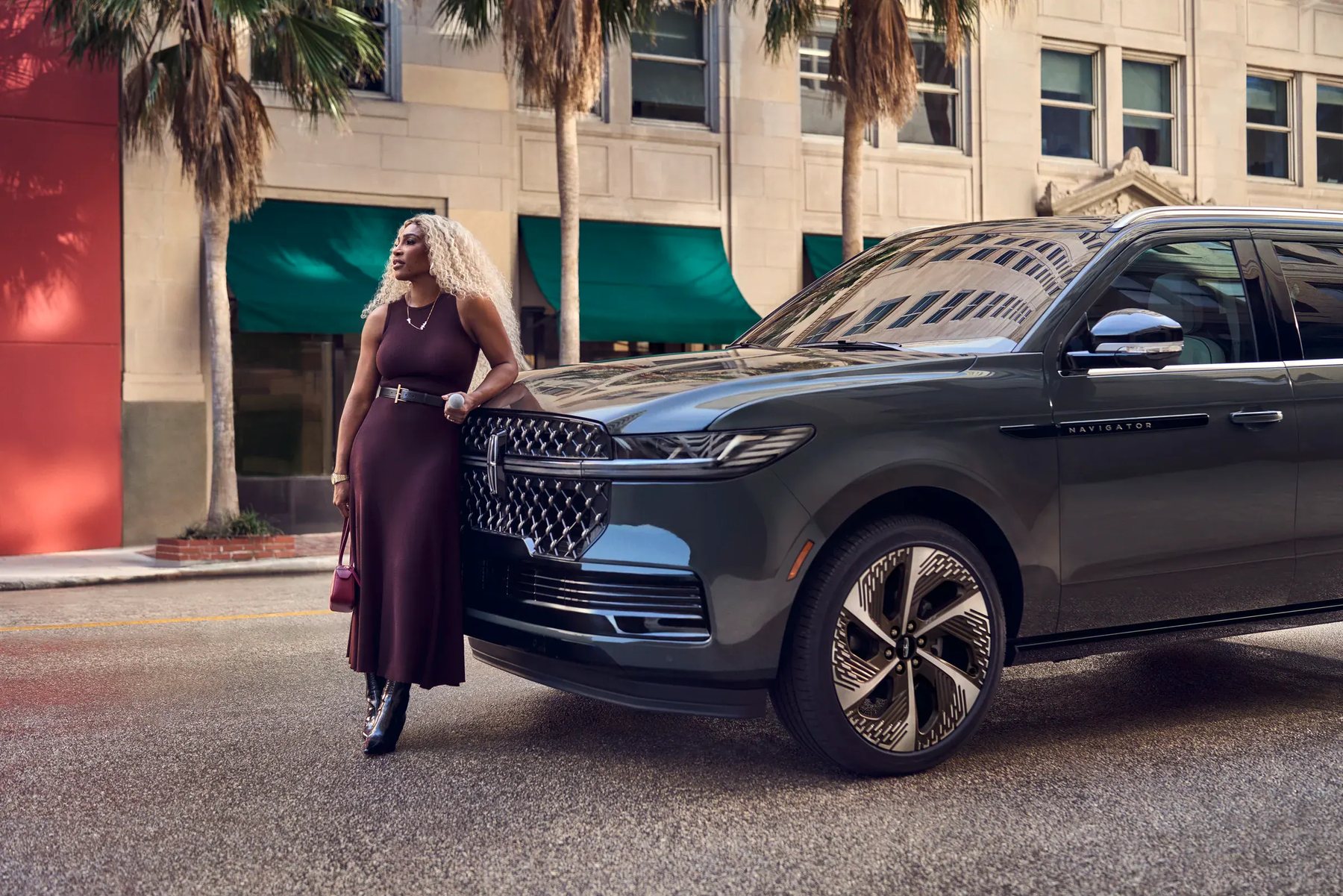
I directed Lincoln's voice for five years.
Four vehicle launches, a centennial, and one language across all of it.
Creative Director, Copy, Digital & Platform · Hudson Rouge / WPP · 2021–2026Winter 2024 to Winter 2025
every agency partner and market
Highest-ranked American brand, up 17 spots, the biggest jump on the list
The insight.
Lincoln was a premium brand running on mass-market rules: louder websites, more features, more noise. Every competitor was doing the same thing, and the category couldn't hear itself anymore. In that market, the most luxurious thing Lincoln could do was lower the volume.
I made the argument that luxury is physiological before it is visual. You cannot tell someone a car is calm. You make the writing calm and let them feel it.
The idea.
Lower the volume. Fewer adjectives, more silence, and sentences that sound the way the vehicles feel.
- RoleCreative Director, Copy, Digital & Platform
- Reported toSVP, Group Creative Director
- ScopeLincoln.com, four vehicle launches, the centennial, CRM, campaigns, product naming
- OwnedThe voice system, copy quality across every digital surface, naming, and the standard the work was measured against
How it showed up.
On TV.
Matthew McConaughey's delivery in the spots already set the brand's tempo: unhurried, a little amused. I crafted a digital voice that could sit next to the spots, so someone who saw one and then opened Lincoln.com heard the same person.
Lincoln.com.
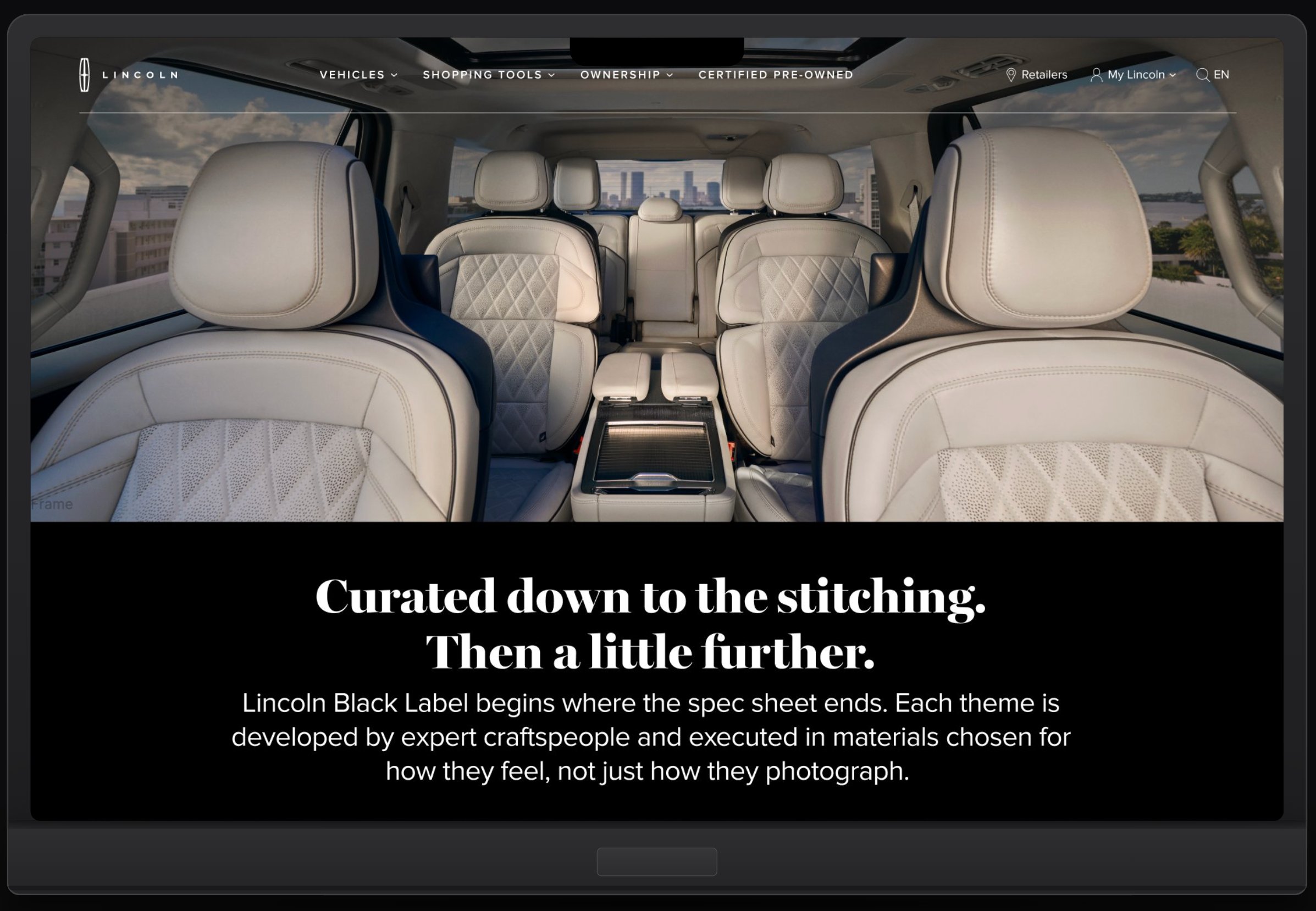
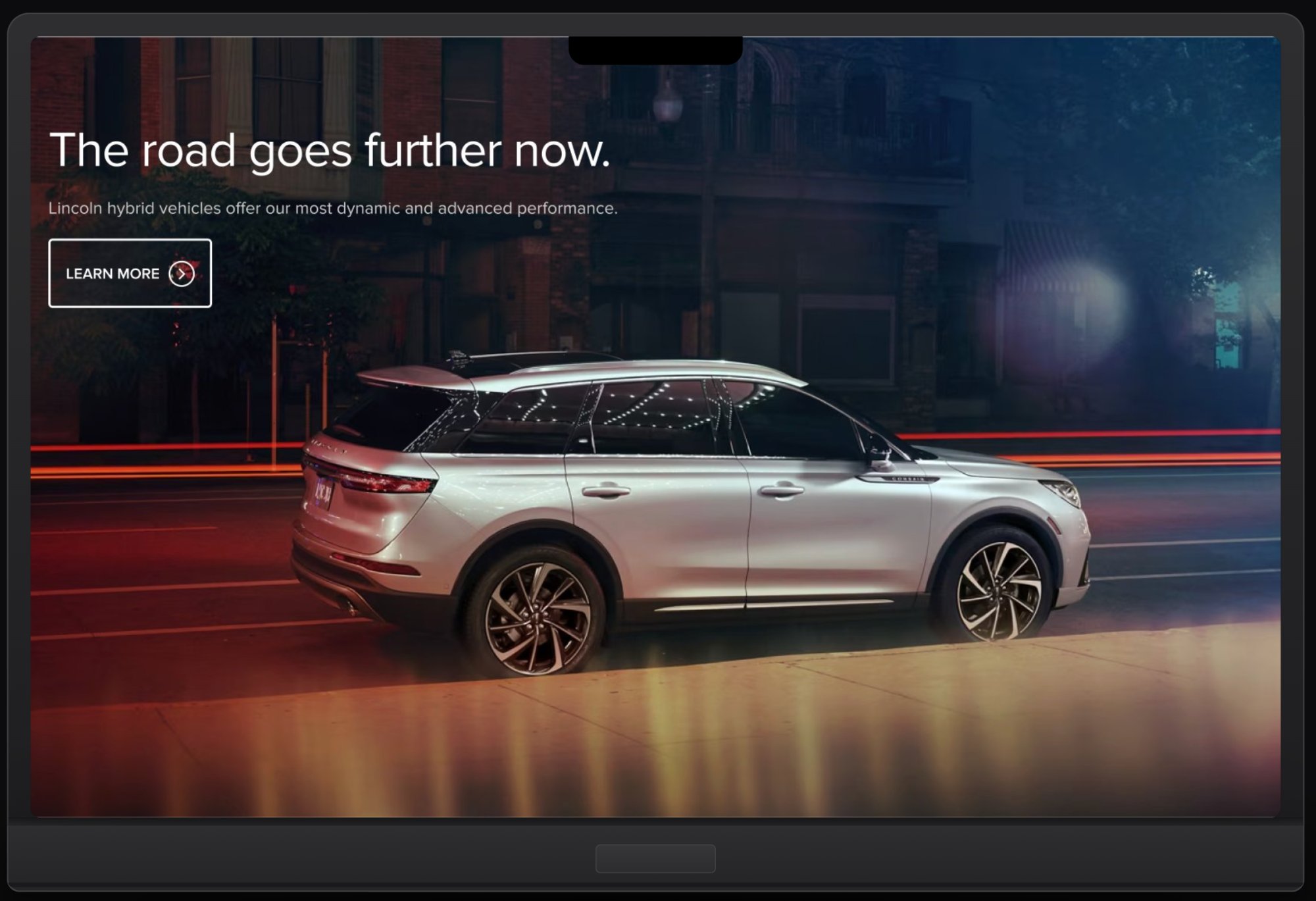
I led the rebuild of the Lincoln.com experience around presence instead of performance specs. The feature tables moved a step further into the experience. We led with photography, breath, and restraint.
Moving spec tables deeper into a car website is a business argument rather than a copy decision, and it gets made against people whose job is comparison shopping. SEO and strategy had reservations. We pushed for experience over feature lists and won.
Lincoln Rejuvenate.
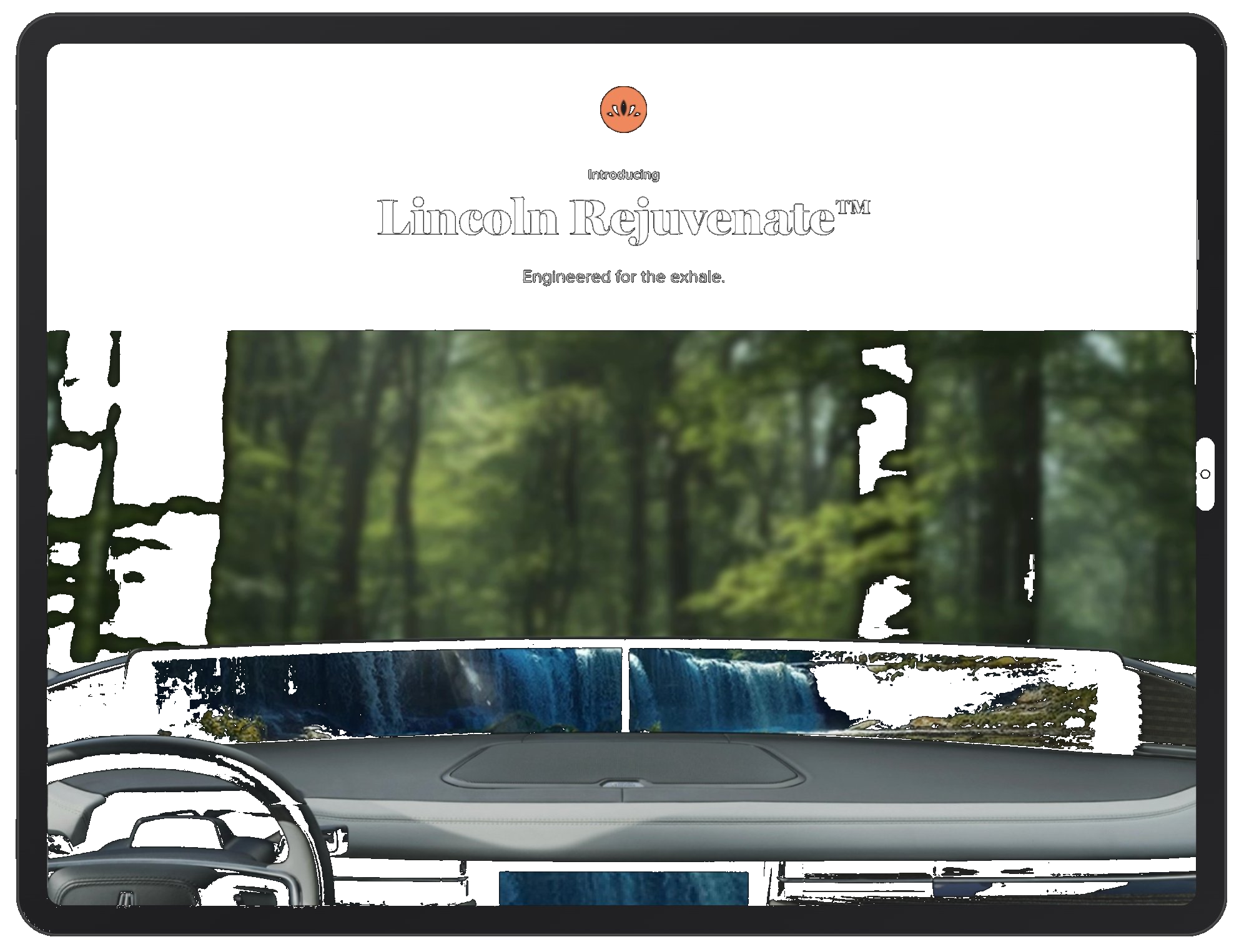
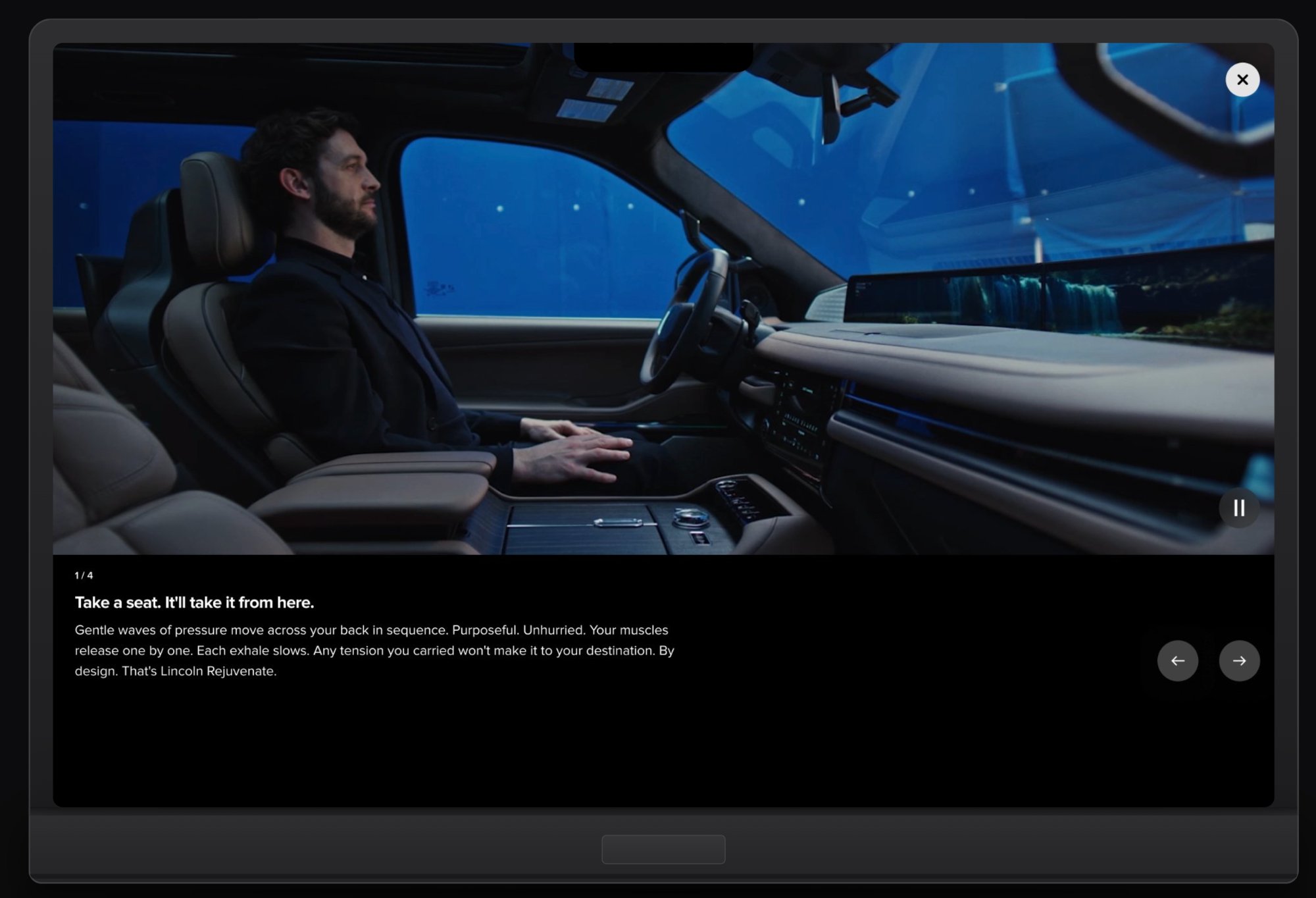
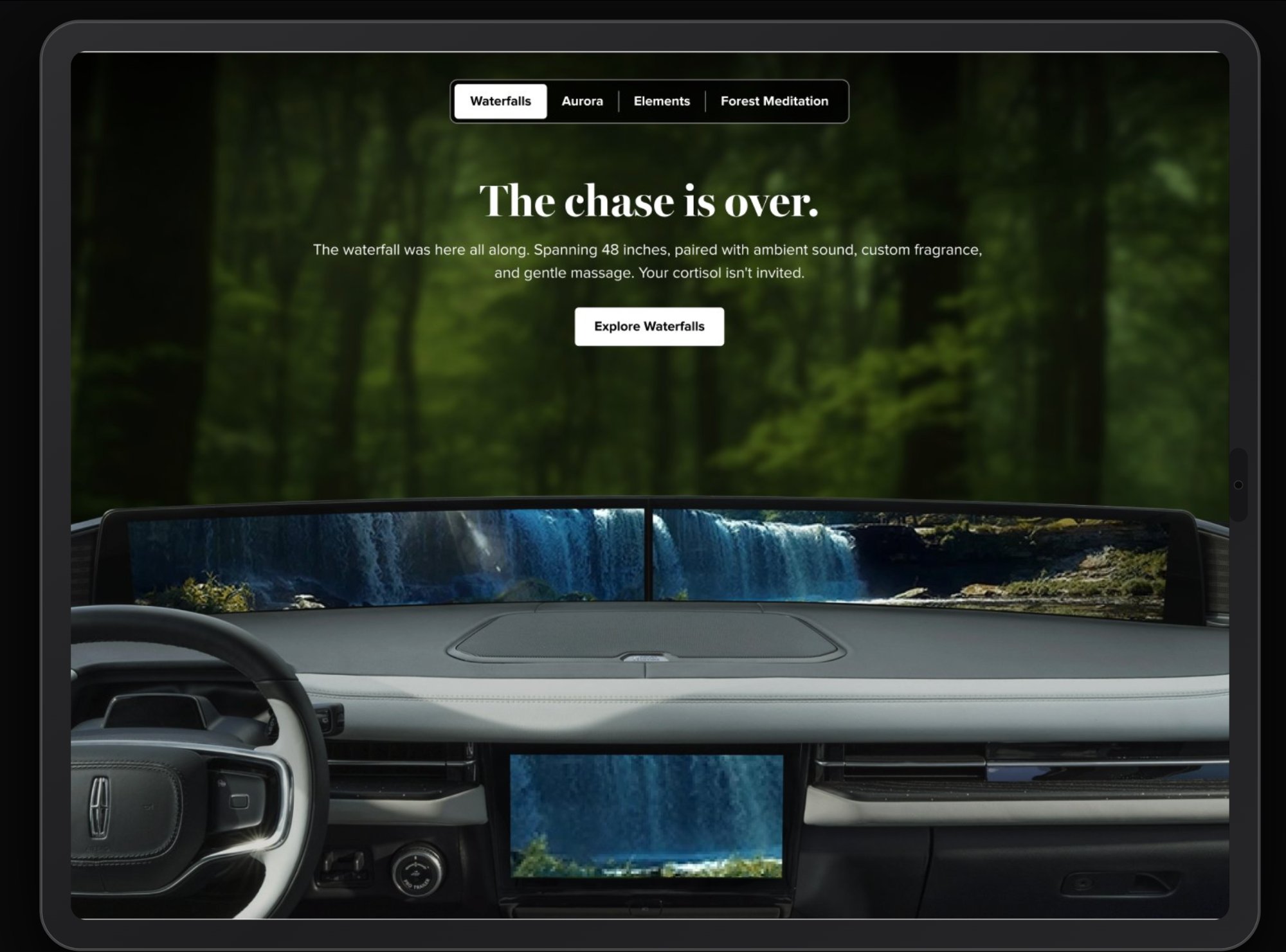
I concepted and wrote the launch of Lincoln Rejuvenate™, the brand's in-vehicle wellness experience. The naming, the voice, and the digital campaign.
Naming a category the customer has never heard of is the part of the job with the least cover, because there's no benchmark to point at when someone asks whether it's right. We answered with prototypes: enough care in the visual and verbal rendering that it transported the user anyway.
Take a seat. It'll take it from here.
How it held.
A voice system works when a junior writer can make the right call on a CRM subject line without hesitating. Its job was never to make my writing better.
I owned the New York side of the system that governed every line of Lincoln copy for five years: .com, product launches, campaigns, CRM. Built with the Detroit team and held across both offices. Fewer adjectives. More silence. Sentences that sound the way the vehicles feel.
The campaigns.
100 Years of Lincoln.
A car company's instinct at a centennial is to count things: horsepower, sales, trophies, years. The film opens by asking that question and refusing it.
To a new century of you.
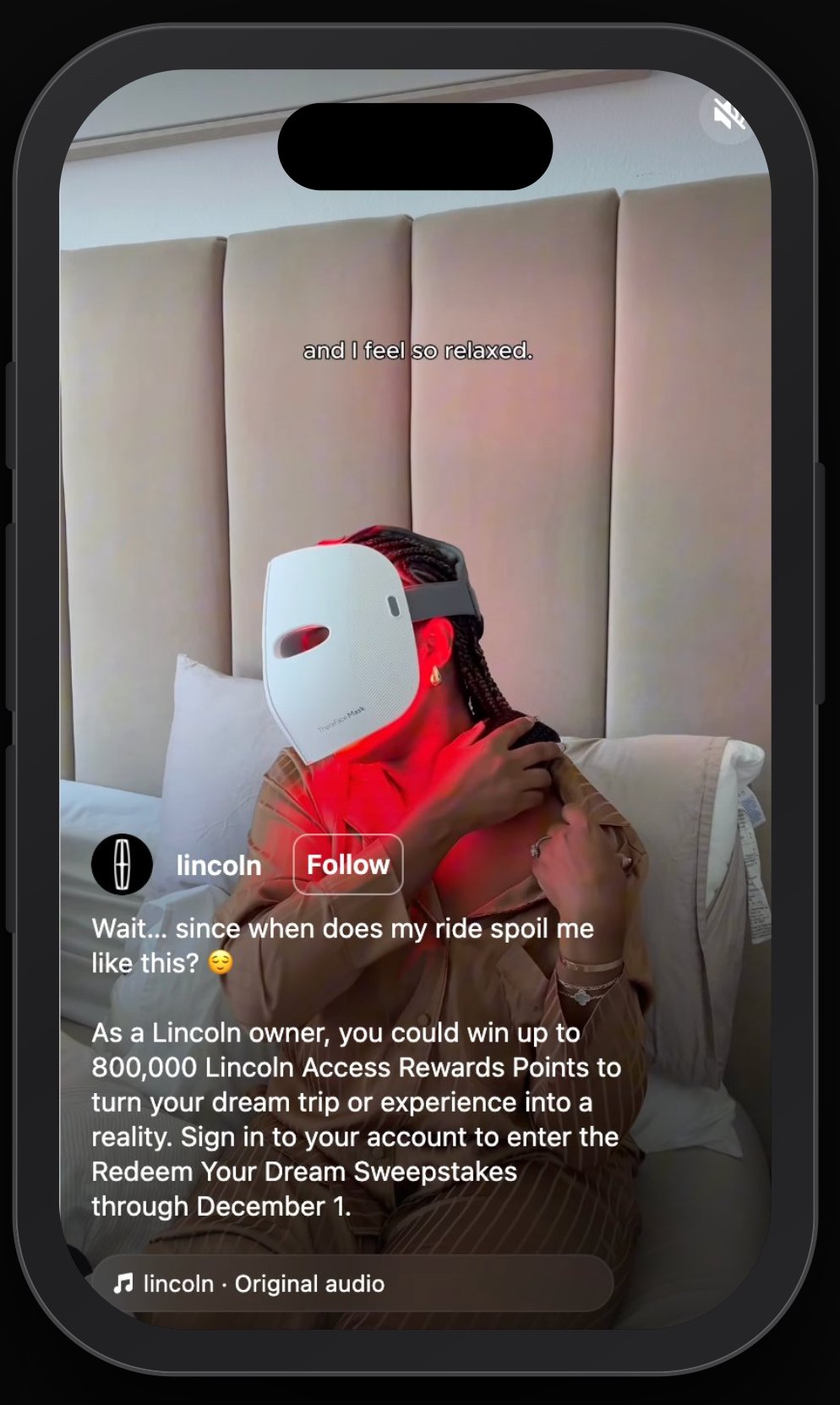
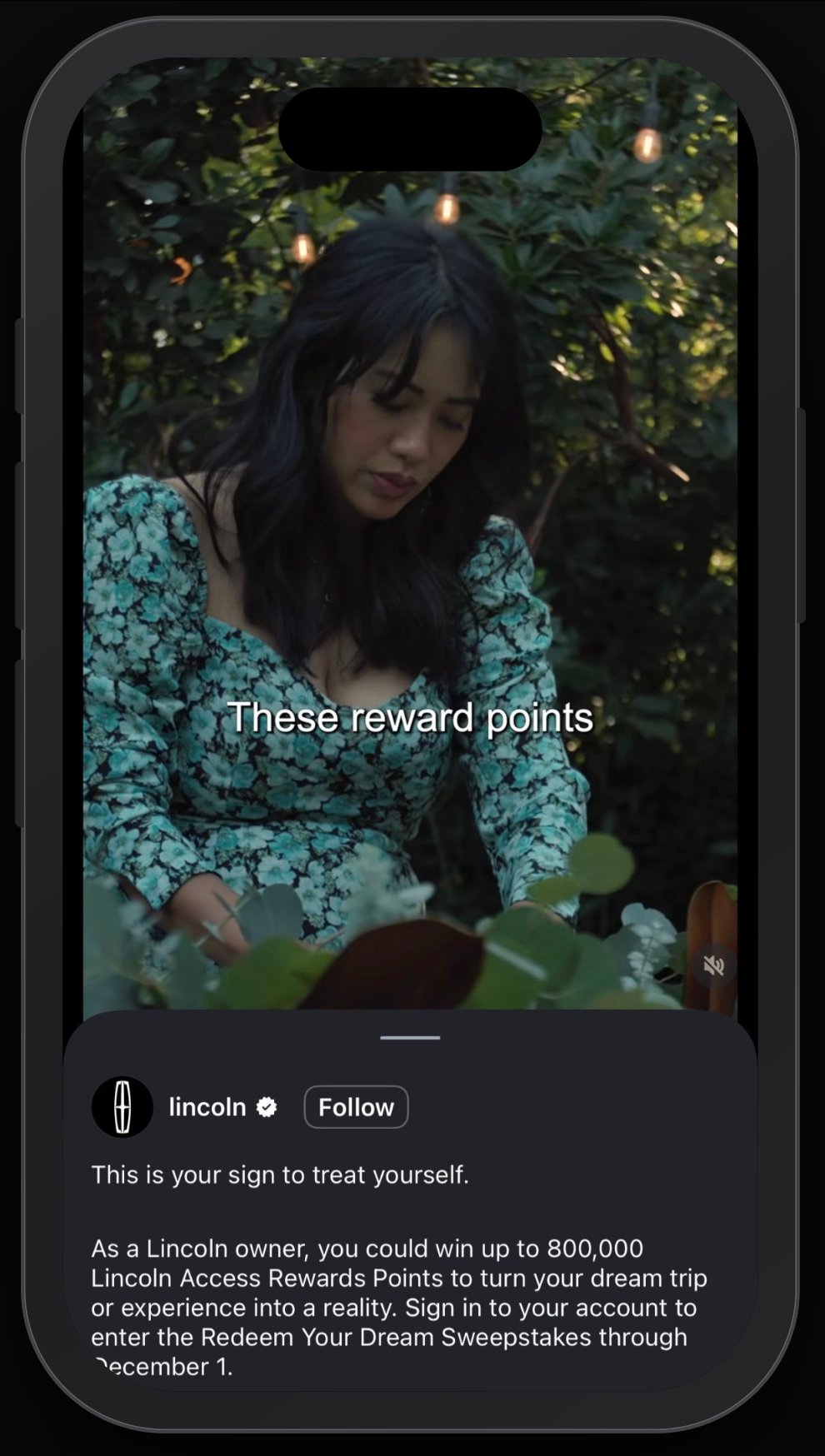
Redeem Your Dream.
I led the writing: the name, the platform line, campaign voice, social, and .com expressions.
100 Faces of Lincoln.
A year-long creator platform: 100 owners, their stories in their words. I shaped the voice and editorial framework, with the Hudson Rouge team.
52M impressions, 7.6% engagement, Silver Shorty Honor.
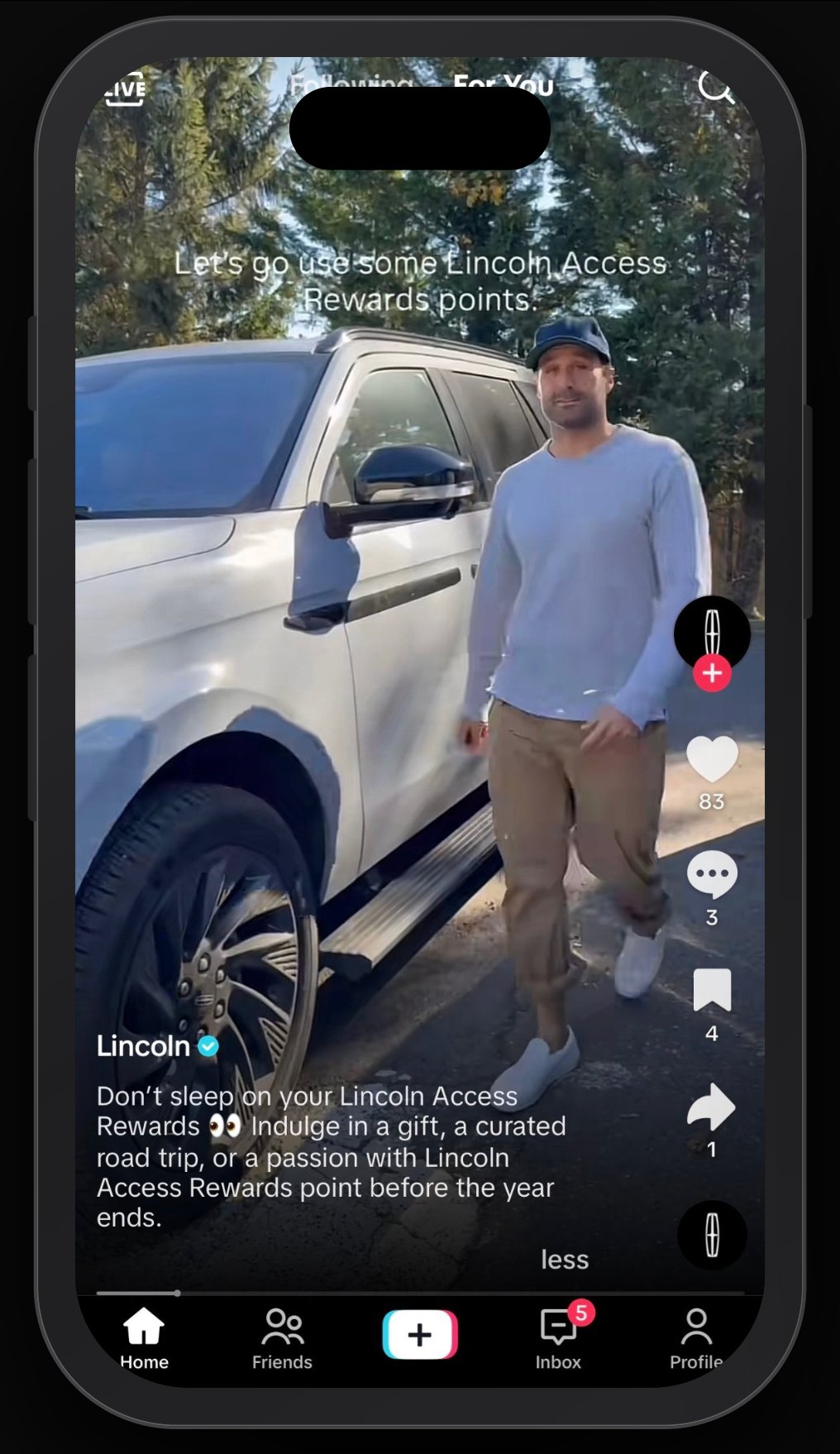
The guidelines also ran as a model.
Lincoln's voice guidelines worked the way guidelines usually work: somebody read them, interpreted them, and applied them. For the moments without a writer in the room, I built the rules into a model.
It was not a fine-tune, it was an instruction set: the voice, the vocabulary, the patterns, the things the brand never says, and a strict and steadily growing list of guardrails. Someone who was not a writer could describe a scenario and get back a draft that was on brand.
I did the same thing at AREA15, where no voice guide existed at all, so the rules and the instruction set got written at the same time.
Digital copy became the brand's voice, and the voice became the experience, and the experience moved the business. None of that was a copy decision at the time. Each one was an argument I had to win in a room.
The voice itself wasn’t the hardest part. Getting two offices, every agency partner, and every market to apply it the same way is what took five years.